Case Study - AI-Powered Cyber Risk Quantification with RISKMON
How a leading financial services firm transformed its cybersecurity posture by leveraging RISKMON's AI-driven cyber risk quantification platform to convert complex threat data into actionable, dollar-denominated risk insights.
- Client
- Global Financial Services
- Year
- Service
- Cyber Risk Quantification, AI Risk Assessment
Overview
A Fortune 500 financial services company managing over $85 billion in assets faced a growing challenge: how to accurately measure, communicate, and manage cyber risk across a complex, globally distributed enterprise. Traditional qualitative risk assessments — red, yellow, green heat maps — were no longer sufficient for the board, regulators, or the executive team demanding quantifiable, evidence-based risk insights.
The firm engaged NOXMON to deploy RISKMON, our AI-powered cyber risk quantification platform, to transform their cybersecurity risk management from subjective scoring into data-driven, dollar-denominated decision making.
The Challenge
- Cyber Risk Quantification
- AI-Powered Assessment
- Monte Carlo Simulation
- Psychometric Evaluation
- Board-Level Reporting
- NIST Framework Alignment
The organization struggled with several interconnected challenges that hindered effective cybersecurity governance:
- Inability to Quantify Risk Financially: Leadership could not translate cybersecurity vulnerabilities into dollar-value impact, making budget justification nearly impossible
- Subjective Risk Assessments: Existing assessments relied on qualitative methods prone to human bias and inconsistent scoring across business units
- Fragmented Visibility: With 14 business units operating on different technology stacks, there was no unified view of enterprise-wide cyber risk exposure
- Regulatory Pressure: Increasing demands from regulators for quantifiable risk metrics aligned to NIST CSF and NIST SP 800-53 frameworks
- Board Communication Gap: The CISO struggled to communicate complex cybersecurity risks in terms that board members and executives could act upon
- Control Effectiveness Uncertainty: No reliable method to measure whether existing security investments were actually reducing risk
Our Solution: RISKMON Deployment
NOXMON deployed RISKMON across the organization in a structured, phased approach that combined AI-driven analytics with deep cybersecurity consulting expertise.
Phase 1: AI-Powered Discovery and Data Collection
RISKMON's onboarding process began with its proprietary psychometric evaluation engine — a key differentiator that eliminates bias from traditional assessment methods:
- Psychometric Questionnaires: Custom-designed surveys assessed organizational behavior, decision-making maturity, and risk perception across all 14 business units. Rather than asking "how secure are you?" — a question that invites bias — RISKMON's AI-generated questions measure actual behavioral readiness and control maturity
- Automated Control Mapping: RISKMON automatically mapped existing security controls against NIST SP 800-53, NIST CSF, and ISO 27001 frameworks, identifying gaps and measuring effectiveness
- Asset and Threat Intelligence Integration: The platform ingested asset inventories, network architecture data, and sector-specific threat intelligence to build a comprehensive risk model
Phase 2: Probabilistic Risk Modeling with Monte Carlo Simulations
At the core of RISKMON is its advanced probabilistic risk engine, which uses Monte Carlo simulations enhanced with Markov Chain modeling to quantify cyber risk:
- Scenario Simulation: The platform simulated thousands of cyberattack scenarios — ransomware, insider breaches, data exfiltration, supply chain compromise, DDoS attacks — calculating the probability and financial impact of each
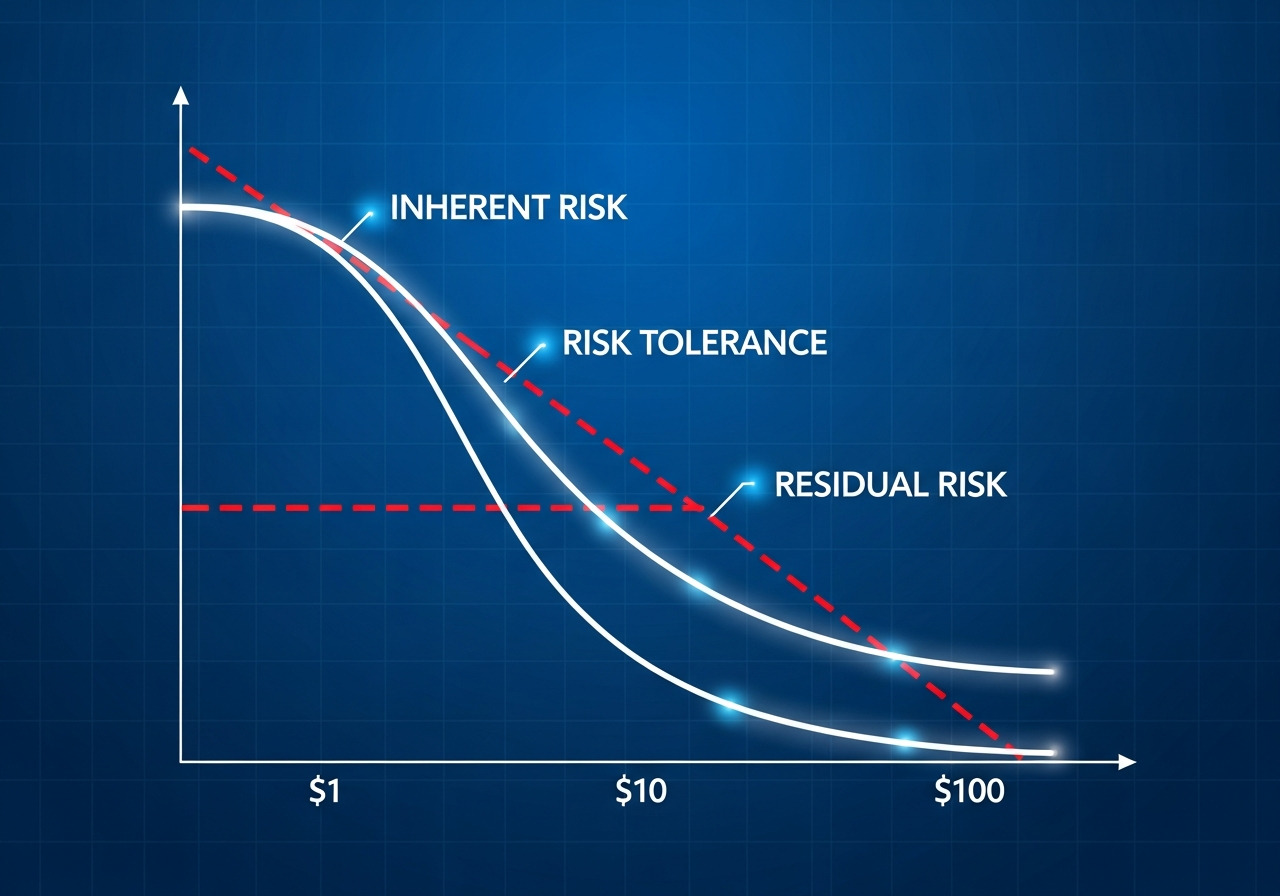
- Loss Exceedance Curves: RISKMON generated loss exceedance curves showing the probability of losses exceeding specific dollar thresholds, giving leadership clear visibility into tail-risk scenarios
- Control Effectiveness Modeling: Each security control was evaluated for its actual risk reduction capability. The platform calculated how much financial exposure decreased when specific controls were fully implemented versus partially deployed
- Dynamic Risk Exposure: Unlike static annual assessments, RISKMON continuously recalculated risk exposure as threat landscapes, control postures, and business contexts evolved
Phase 3: AI-Driven Risk Intelligence and Reporting
RISKMON's AI engine transformed raw simulation data into actionable intelligence:
- Financial Risk Dashboards: Real-time dashboards displayed annualized loss expectancy (ALE), value-at-risk (VaR) at the 95th percentile, and risk reduction ROI for every security investment
- Board-Ready Reports: Automated generation of executive-level reports translating cybersecurity metrics into business language — "there is a 15% probability of a $12M+ data breach within the next 12 months" rather than "we have 47 critical vulnerabilities"
- Control Prioritization: AI-driven recommendations identified which security investments would deliver the greatest risk reduction per dollar spent
- Cyber Insurance Optimization: RISKMON's quantification data helped the firm negotiate cyber insurance premiums with actuarial-grade risk evidence
RISKMON gave us something we never had before — the ability to present cyber risk in financial terms that our board actually understands. The AI-powered quantification completely transformed how we prioritize investments and communicate risk across the organization.
The AI Advantage
What sets RISKMON apart from traditional risk assessment tools is its deep integration of artificial intelligence throughout the quantification process:
Bias Elimination Through Psychometrics: Traditional cybersecurity assessments ask experts to rate controls on a 1-5 scale — a method riddled with anchoring bias, optimism bias, and inconsistency. RISKMON's AI-generated psychometric evaluations use behavioral science techniques to extract accurate, unbiased assessments of organizational security maturity.
Intelligent Threat Modeling: RISKMON's AI continuously analyzes threat intelligence feeds, industry-specific attack patterns, and emerging vulnerability data to dynamically adjust risk models. When a new zero-day vulnerability affects the financial sector, RISKMON automatically recalculates the organization's risk exposure.
Predictive Risk Analytics: Beyond measuring current risk, RISKMON's machine learning models forecast how risk exposure will evolve based on planned technology changes, control implementations, and emerging threat trends.
Natural Language Risk Communication: The platform's AI translates complex probabilistic models into clear, narrative-driven reports that non-technical stakeholders can immediately understand and act upon.
Results and Impact
The RISKMON deployment delivered transformative results within the first 90 days:
- Risk exposure quantified
- $47M
- Reduction in risk exposure
- 62%
- ROI on security spend
- 3.8x
- Board-level risk blind spots
- Zero
Quantifiable Outcomes
- $47 Million in Risk Identified: RISKMON quantified $47M in annualized cyber risk exposure across the enterprise, with $18M attributed to previously unidentified threat vectors
- 62% Risk Reduction: Targeted control improvements guided by RISKMON's AI recommendations reduced overall risk exposure by 62% within six months
- 3.8x Return on Security Investment: Every dollar invested in RISKMON-recommended controls delivered $3.80 in measurable risk reduction
- 40% Cyber Insurance Premium Reduction: Actuarial-grade risk data from RISKMON enabled the firm to renegotiate their cyber insurance policy, saving $2.1M annually
- Compliance Acceleration: Achieved full NIST CSF alignment across all 14 business units in half the projected timeline
Strategic Transformation
- Board Engagement: For the first time, board members actively engaged in cybersecurity discussions, approving a 35% increase in security budget based on RISKMON's financial risk evidence
- Risk-Informed Budgeting: Security spending shifted from "best practice" allocations to data-driven investments targeting the highest-impact risk areas
- Continuous Risk Monitoring: Moved from annual point-in-time assessments to continuous, real-time cyber risk monitoring
- Regulatory Confidence: Regulators cited the firm's quantitative risk management approach as a model for the industry
Ongoing Partnership
Following the initial deployment, the firm expanded its RISKMON usage to include third-party risk management, M&A due diligence cyber risk assessments, and AI risk evaluations for their growing portfolio of machine learning initiatives. NOXMON continues to provide virtual CISO services alongside the RISKMON platform, ensuring the organization maintains its industry-leading cybersecurity posture.
The success of this engagement demonstrates how AI-powered cyber risk quantification — when combined with NOXMON's deep cybersecurity expertise — can transform cybersecurity from a cost center into a strategic business enabler.
This case study represents a typical RISKMON engagement model and outcomes. Specific client details have been modified to protect confidentiality while illustrating our methodology and results.