Cyber Risk for IT/OT and IoT in Critical Infrastructure
by Alexander Miranda, Principal Consultant
Cyber Risk for IT/OT and IoT in Critical Infrastructure
For decades, operational technology (OT) lived in isolation—air-gapped control systems running pumps, sensors, signals, and production lines with little thought to cybersecurity. That world is gone. The drive for real-time analytics, remote operations, and predictive maintenance has fused IT, OT, and a rapidly growing fleet of IoT devices into a single, interconnected fabric. The payoff is enormous. So is the risk.
At NOXMON, we help operators of critical infrastructure understand, quantify, and reduce cyber risk in converged environments—where a network compromise can have physical, safety, and economic consequences.
Why Convergence Changes the Risk Equation
In traditional IT, the worst case is usually data loss or downtime. In converged IT/OT/IoT, the worst case can be a stalled toll plaza, a contaminated batch, a disabled substation, or a safety incident. Three dynamics make this risk especially hard to manage:
- Unpatchable, long-lived assets: PLCs, RTUs, and field sensors often run for 15–20 years on firmware that cannot be easily updated or taken offline.
- Explosive IoT growth: Cameras, telematics units, smart meters, and edge gateways multiply entry points—many shipped with weak defaults and no lifecycle management.
- Flattened networks: When OT connects to IT for data and IT connects to the cloud, a phishing email can become a path to physical systems.
Quantifying Cyber Risk Across the Converged Estate
You cannot defend what you cannot measure. NOXMON applies a risk-quantification approach to converged environments:
- Asset & Dependency Mapping: Build a unified inventory across IT, OT, and IoT, including the data and control dependencies that link them.
- Consequence-Driven Modeling: Prioritize by physical and operational impact—safety, availability, and integrity—not just data sensitivity.
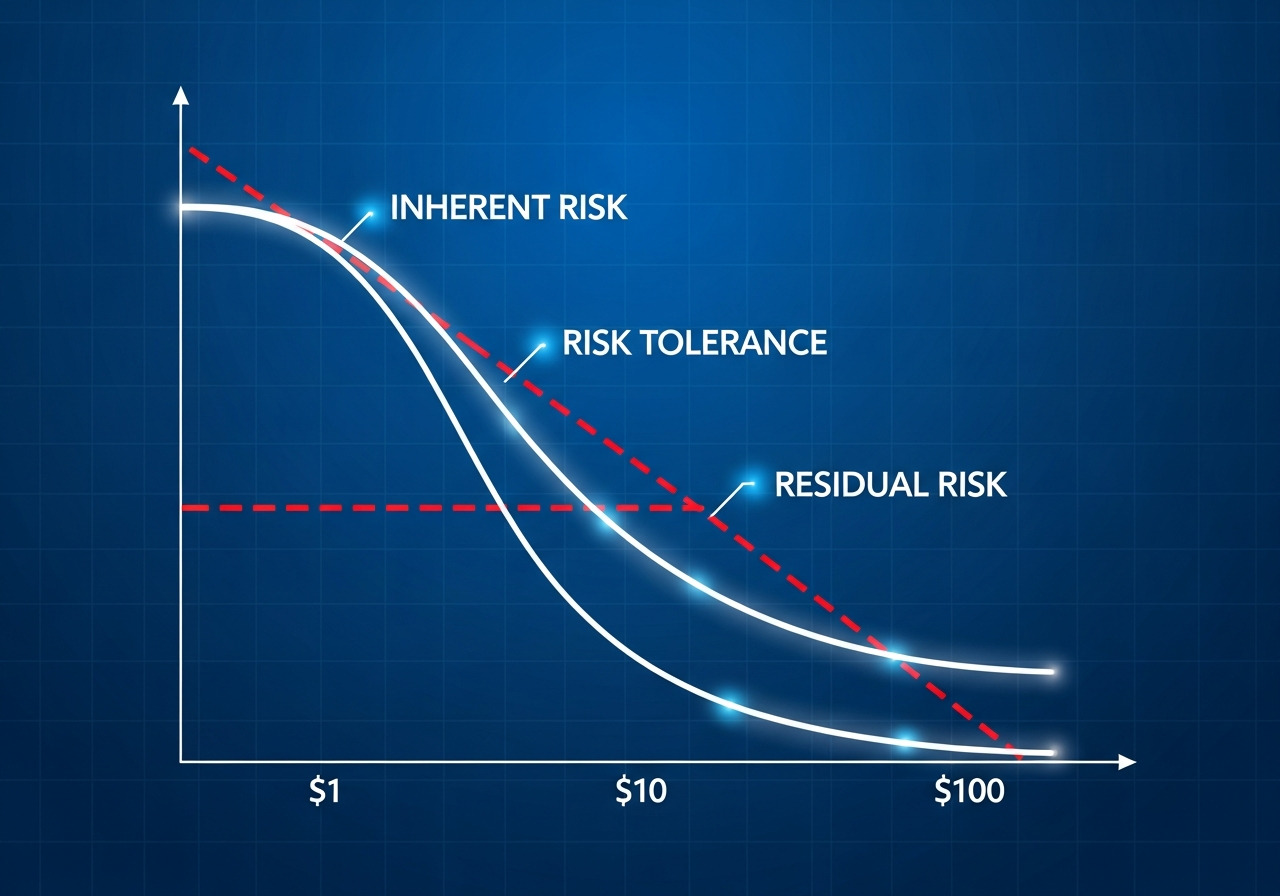
- Loss Exceedance Analysis: Use Monte Carlo modeling to express risk in financial and operational terms leadership can act on.
- Control ROI: Identify the segmentation, monitoring, and access controls that reduce the most risk per dollar invested.
A Reference Architecture for Converged Defense
NOXMON aligns controls to recognized frameworks—including IEC 62443 for industrial systems and the NIST Cybersecurity Framework—and applies proven design principles:
- Zoned segmentation: Apply the Purdue model and zone/conduit design to separate enterprise IT, the industrial DMZ, and OT cells.
- OT-aware monitoring: Deploy passive network monitoring that understands industrial protocols without disrupting operations.
- Identity & remote access governance: Lock down vendor and remote access—a leading cause of OT incidents—with brokered, monitored connectivity.
- IoT lifecycle management: Onboard, credential, monitor, and retire IoT devices through a managed process rather than ad hoc deployment.
From Risk Assessment to Resilience
Technical controls are only part of the answer. NOXMON wraps converged-environment security in a governed program: vCISO leadership that spans engineering and IT, OT-aware incident response and tabletop exercises, and continuous risk reporting to leadership and regulators. The goal is resilience—the ability to keep critical operations running safely even under attack.
Conclusion
The convergence of IT, OT, and IoT is irreversible, and it delivers real operational value. But in critical infrastructure, the stakes of getting security wrong are measured in safety and uptime, not just data. NOXMON helps operators quantify converged cyber risk, prioritize the controls that matter most, and build programs that protect the physical processes our communities depend on.